“IT OPERATING MODEL: FOCUS ON STANDARDISATION & BUSINESS VALUE”
A clearly defined IT Operating Model enables IT organisations to respond faster to change and consistently deliver business value. Standardised processes, transparent services and clearly assigned roles create the structural foundation for efficiency, scalability and long‑term stability.



Initial Situation
An internationally operating manufacturer of specialised commercial vehicles is undergoing a strategic reorganisation of its IT organisation. Growing demand for digital services, increasingly complex system landscapes and rising expectations from global business units are pushing existing IT structures beyond their limits.
At the same time, the share of externally delivered services is increasing, shifting IT’s role from hands‑on delivery towards coordination, control and integration. This transition requires a consistent service portfolio, professional demand and relationship management, clearly defined responsibilities and a focused sourcing model. The future IT Operating Model defines this direction and ensures sustainable implementation through targeted, structural measures.

Objectives
- Design and implementation of a structured IT Operating Model
-
Establishment of a future‑ready role model to professionalise IT and ensure operational stability
-
Development of demand and relationship management to efficiently capture and realise business requirements
-
Positioning of the Service Desk as a central, business‑oriented single point of contact (SPOC)
-
Establishment of a structured IT service portfolio as the foundation for a transparent and manageable IT organisation
-
Introduction of standardised, industry‑aligned ITIL processes: Demand, Incident, Service Request, Service Portfolio, Service Catalogue and Relationship Management
-
Definition and implementation of a clear role model
-
Optimisation of the support structure to increase responsiveness and service quality
Challenges
-
Limited transparency across the IT landscape and services
-
Unstructured demand intake and constrained support capacity
-
Missing single points of contact and limited consulting capability within IT
-
Unclear responsibilities across teams and functions
-
Inefficient processes leading to slow response times and reduced service quality
Measures
-
Creation of a transparent, business‑aligned IT service portfolio
-
Structured demand management and a future‑proof sourcing model for the Service Desk
-
Clear role model with unambiguous responsibilities
-
Defined roles, interfaces and accountability across IT and business
-
ITIL‑aligned process optimisation and standardisation
KC Process Model
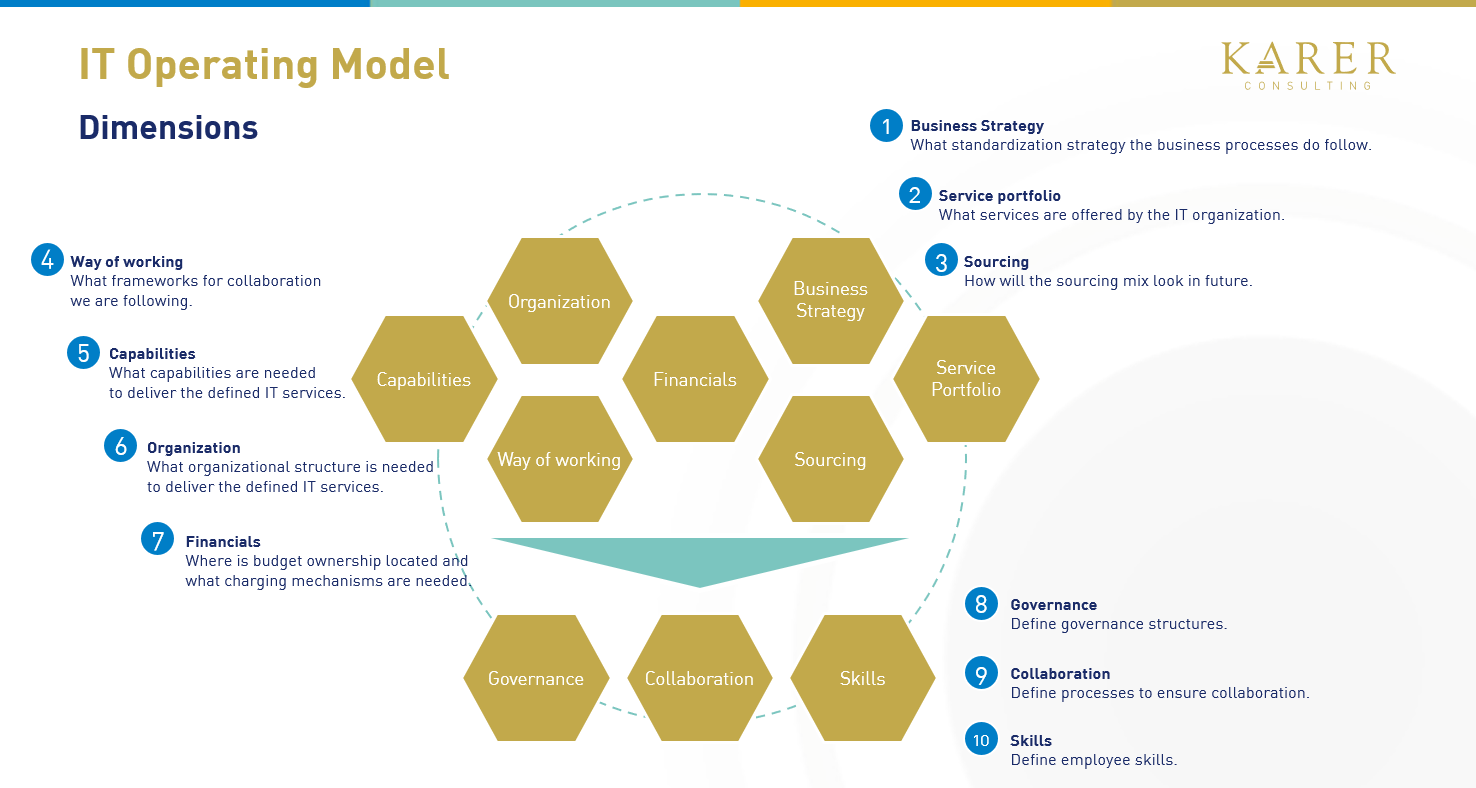
To make the IT organisation future‑proof and sustainably manageable, several key capability areas were systematically developed as part of the engagement. The jointly agreed process model covers the entire IT Operating Model and ensures consistent implementation across organisation, processes and services:
- OCM: Structured organisational change management with transparent communication and active employee involvement throughout the transformation.
- Service portfolio: Comprehensive capture and structured representation of all IT services, including clearly assigned responsibilities to create a consistent portfolio.
- Roles: Definition and implementation of a clear role model to unambiguously assign responsibilities and professionalise collaboration within IT.
- Demand Management: Design of a standardised process to systematically capture, evaluate and prioritise business requirements.
- Incident Management: Optimisation and redesign of incident management processes in line with ITIL standards.
- Service Request Management: Establishment of a structured request management approach with defined processes, roles and service offerings.
- Sourcing: Development of a future‑ready sourcing model for the Service Desk, including clear scope definitions, responsibilities and interfaces
By addressing these areas holistically, a consistent, transparent and scalable IT Operating Model was established.



Stefan Paule
Telephone: +49 751 185 275 0
E-Mail: sales@karer-consulting.com
www.karer-consulting.com