ISO/IEC 27001 – Information Security Management System
ISO/IEC 27001 provides the globally recognised framework for effective and structured information security management.
As experienced consultants, we support organisations in permanently embedding information security within their IT operating model and integrating it with existing governance structures, IT service management and IT operations.
Rather than viewing individual security measures in isolation, we develop holistic solutions that link organisation, processes, technologies and responsibilities. The result is an ISMS that meets both regulatory requirements and the practical demands of day-to-day business. At the same time, we lay the foundations for compliance with NIS2, DORA and other regulatory requirements, without creating parallel or redundant structures. By combining strategic consultancy with pragmatic implementation, we support our clients in reducing security risks, demonstrating compliance and sustainably strengthening their digital resilience.
Definition
What is ISO/IEC 27001?
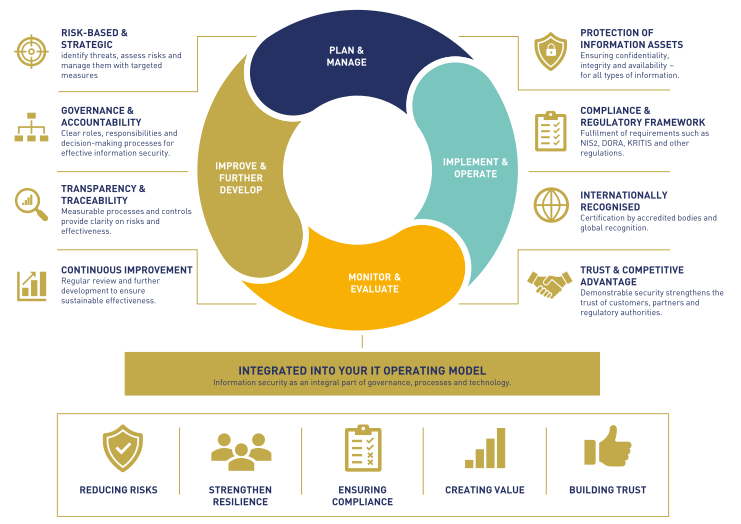
ISO/IEC 27001 defines the requirements for an information security management system (ISMS) and provides organisations with an internationally recognised framework for managing information security risks. At its core is a risk-based approach, which is used to systematically identify, assess and address threats through appropriate measures.
Today, the standard serves as the basis for numerous organisations to implement regulatory requirements in a structured manner, such as NIS2, DORA, the EU AI Act, data protection regulations and sector-specific compliance requirements. An effective ISMS establishes the necessary governance, risk and compliance structures to manage these requirements in an integrated and efficient manner.
However, success does not depend on the number of policies or controls. A modern ISMS follows the principle:
As much security as necessary, as little bureaucracy as possible.
The aim is a practical and risk-based approach that meets regulatory requirements whilst supporting business operations.
Key components include established security processes (risk management, incident management, access management), effective governance structures (role models, policy management, security committees) and continuous improvement mechanisms (audits, control tests, management reviews) . In this way, information security becomes an integral part of corporate governance and lays the foundation for sustainable compliance, resilience and trust.







- Analysing regulatory requirements and defining the target state: To begin with, we analyse the requirements relevant to your organisation from ISO 27001, NIS2, DORA, KRITIS, customer requirements and internal governance guidelines. On this basis, we develop a shared target state for information security, compliance and resilience that is aligned with your corporate strategy and operating model.
- Aligning the IT operating model and security organisation: Information security can only be effective if responsibilities, processes and decision-making structures are clearly defined. We therefore integrate security requirements directly into your IT operating model and embed them within governance structures, role models, control mechanisms and management processes. In this way, we ensure that information security is deeply integrated into the business units.
- Developing a gap analysis and roadmap: Using a structured maturity and gap analysis, we assess your organisation’s current status against regulatory requirements and established best practices. We prioritise the identified areas for action based on risks, compliance requirements and business benefits, and translate these into an actionable roadmap.
- Implementing measures and controls: Working alongside your line-of-business and IT departments, we implement the necessary organisational, procedural and technical measures. The result is not an isolated ISMS, but an integrated security and governance model that complements and strengthens existing operational and management processes.
- Monitoring, evidence management and continuous improvement: We ensure the effectiveness of the security programme through key performance indicators, controls, audits and regular management reviews. At the same time, we create transparency for auditors, regulatory authorities and customers, and lay the foundations for the continuous development of your security and compliance landscape.